Building a Mobile App for Saudi Users: Arabic-First UX, Payments and Performance
Saudi users are among the most mobile-first in the world. A good app here is Arabic-first, fast, and pays the way customers expect.
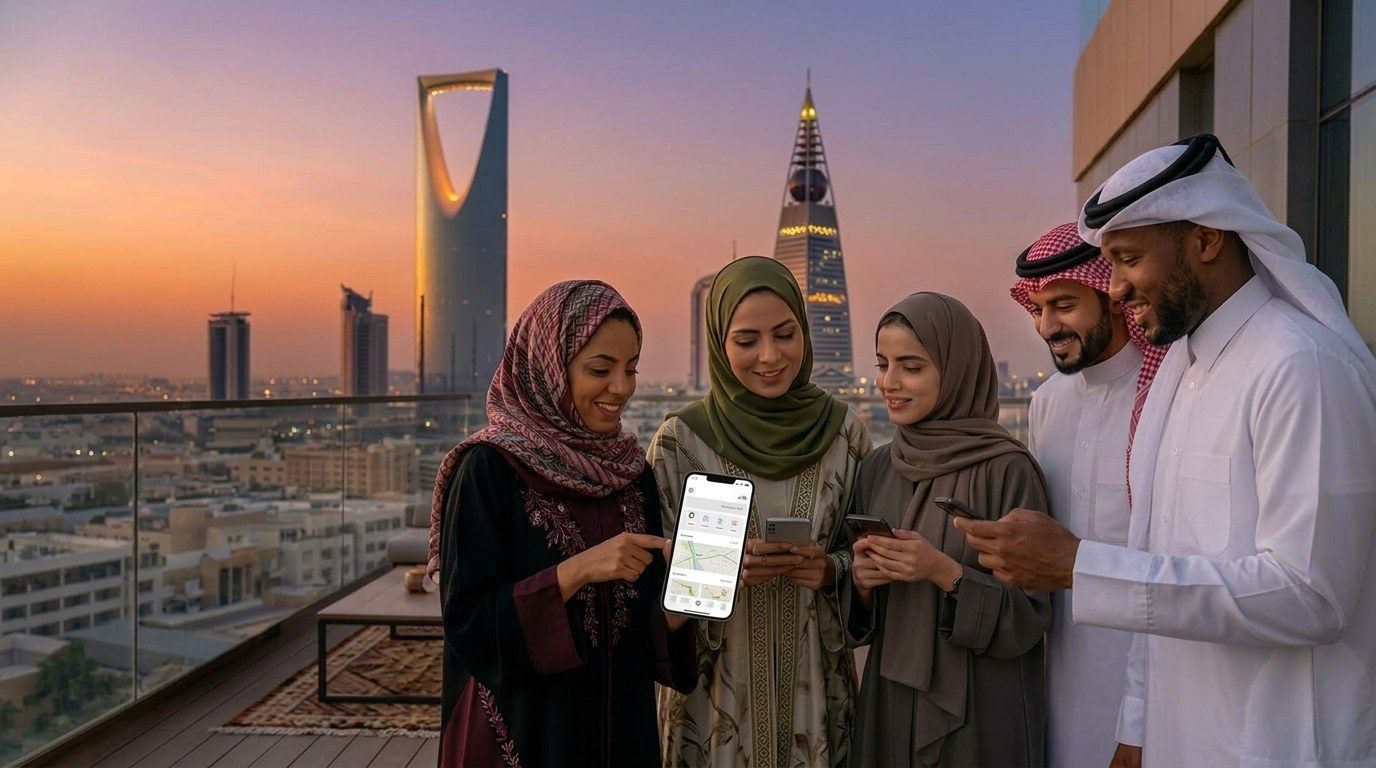
Smartphone use in Saudi Arabia is close to universal, and customers expect to bank, shop, book and learn from their phones. That raises the bar for mobile app development in Saudi Arabia and for every business app. A translated version of a Western app rarely performs well. Successful apps are designed for Saudi users from the first sketch.
Design Arabic-first, not Arabic-also
Right-to-left (RTL) layout affects far more than text direction. Navigation, icons with direction, progress bars, swipe gestures and charts all need to mirror correctly. Arabic text also needs suitable fonts, line heights and more space than English in many components.
- Design both Arabic and English layouts from the start.
- Let users switch language without restarting the app.
- Test with real Arabic content, not placeholder text.
- Support Hijri dates where your users expect them.
Local payment methods
Checkout is where many apps lose customers. Support the methods Saudi users already trust: mada debit cards, Apple Pay, STC Pay and other popular wallets, plus credit cards and, where it fits your business, buy-now-pay-later options. Work with a payment gateway licensed to operate in the Kingdom.
Native or cross-platform?
Native apps (Swift for iOS, Kotlin for Android) give the best performance and access to every device feature. Cross-platform frameworks such as Flutter and React Native share one codebase across both platforms, reducing cost and time to market. For most business apps, cross-platform is the sensible default. Choose native for graphics-heavy apps or deep hardware integration.
Performance and reliability
- Keep app size small and startup fast.
- Cache content so key screens work on weak connections.
- Use push notifications with care, in the user’s language.
- Monitor crashes and fix them in fast release cycles.
The parts users never see
Every app needs a backend: APIs, databases, admin dashboards, analytics and integrations with your ERP or CRM. Plan these together with the app so that orders, bookings and customer data flow straight into your operations. Many of our mobile projects connect directly to our industry platforms, such as the player app for GREEN or the student portal for BLUE.
Launching on the App Store and Google Play
Prepare Arabic and English store listings, screenshots for both languages, a privacy policy aligned with the PDPL and a clear support channel. Plan a soft launch to gather feedback before marketing at scale.
Next steps
Whether you need a customer app, an internal field app or a companion to your website, our mobile app design and development team handles strategy, UI/UX, development, testing and launch. If you also need a web presence, see our website and e-commerce development service.
Explore the services and solutions mentioned in this article.
Frequently asked questions about mobile app development in Saudi Arabia
How long does it take to build a mobile app?
A focused first version usually takes three to five months including design, development and testing. Complex apps with many integrations take longer and are best released in phases.
Should my app support both Arabic and English?
For most Saudi businesses, yes. Designing both from the start is far cheaper than adding a second language later.
Which payment methods should a Saudi app support?
At minimum mada and Apple Pay, plus credit cards. Popular local wallets such as STC Pay are also widely expected.